5 Common Mistakes That Lead to Bad Grades (and What I Learned From Them)
We’ve all been there: staring at a less-than-stellar grade, a knot forming in our stomach, wondering where it all went wrong. For a long time, I thought bad grades were simply a reflection of my intelligence, or lack thereof. It took me a while, and a fair share of academic bumps and bruises, to realize that my struggles weren’t about capability, but about *strategy*. My journey through high school and early college was a masterclass in making nearly every academic mistake in the book. But more importantly, it was a profound lesson in understanding *why* these mistakes happen and *what concrete steps* can be taken to turn things around. This isn’t just a list of pitfalls; it’s a reflection on the transformative lessons I personally extracted from each one, changing my academic trajectory for good.
My Initial Stumble: Underestimating Consistent Effort and Embracing Last-Minute Scrambles
One of the most insidious habits I developed was the art of procrastination, inevitably leading to the frantic, caffeine-fueled cram sessions right before an exam. I genuinely believed I performed better under pressure. The reality? I was simply remembering enough to pass, not truly understanding or retaining information. My grades were a chaotic rollercoaster, punctuated by moments of sheer luck and abysmal failures when the “luck” ran out.
The Illusion of Productivity from Procrastination
I’d spend hours *thinking* about studying, organizing my notes perfectly, or watching endless “study with me” videos, all while the actual learning was deferred. The false sense of productivity from these preparatory tasks masked the fact that I wasn’t engaging with the material. This cyclical pattern of delaying meaningful work led to immense stress, superficial learning, and ultimately, inconsistent and often disappointing grades.
The Hard-Earned Lesson: Small, Regular Doses are Academic Gold
The biggest revelation for me was the power of consistency. I learned that studying for 30 minutes every day for a week was infinitely more effective than a single 3-hour marathon the night before. This realization didn’t come easily; it required a conscious shift in mindset. I started breaking down large tasks into smaller, manageable chunks. Instead of “study for the history exam,” it became “review Chapter 1 notes for 20 minutes” or “create 10 flashcards on key dates.” This approach, often called spaced repetition, not only reduced my anxiety but significantly improved my retention and understanding. My grades began to stabilize, then climb, as I built a foundation of genuine knowledge, not just temporary recall.
The Trap of Passive Engagement: Why Just Reading Wasn’t Enough for Deep Understanding
For years, my primary study method was re-reading. I’d read textbooks, re-read my notes, and then re-read them again. I’d highlight everything, making my pages look like a rainbow, convinced that seeing the words repeatedly would magically embed them in my brain. When exam time came, I’d often find myself staring at questions, recognizing the concepts but unable to articulate them or apply them to new scenarios. My lack of engagement meant I was a passive recipient of information, not an active participant in my own learning.
Highlighting Without Comprehending
I confused familiarity with mastery. Just because I had “read” something multiple times didn’t mean I had truly processed it. My brain wasn’t being challenged to connect ideas, evaluate information, or solve problems. This superficial interaction with the material left me vulnerable to any question that required more than rote memorization, leading to a frustrating plateau in my academic performance.
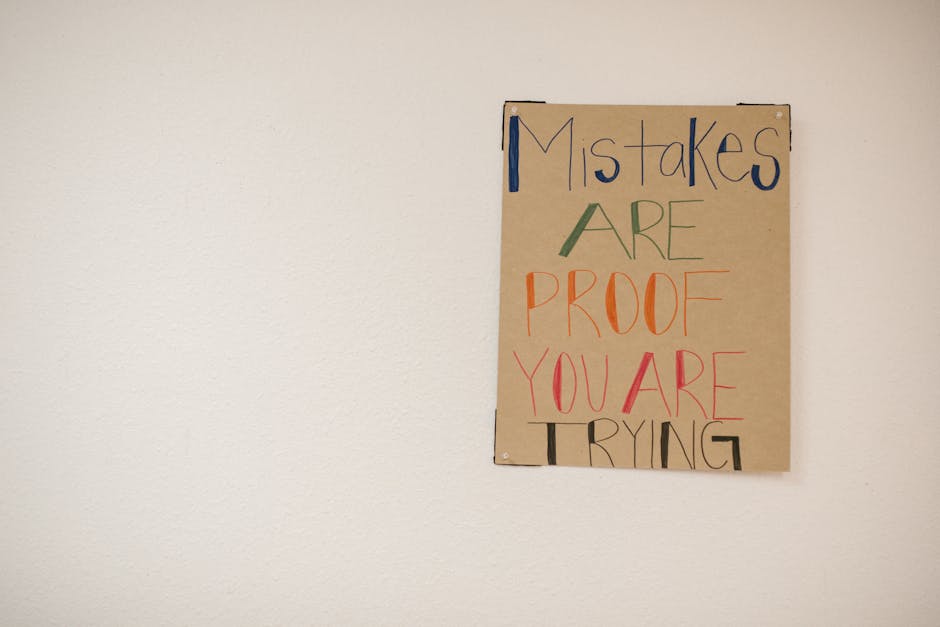
The Hard-Earned Lesson: Active Learning Unlocks True Knowledge
The turning point was when a tutor introduced me to active recall and elaborative interrogation. Instead of just re-reading, I started asking myself questions about the material without looking at my notes. I’d try to explain concepts in my own words, as if teaching someone else. I made flashcards, but not just for definitions; I’d put complex questions on one side and detailed answers on the other. I started doing practice problems *before* I felt ready, using mistakes as learning opportunities. This shift from passively consuming information to actively wrestling with it was transformative. My understanding deepened, my ability to apply concepts soared, and my grades reflected a genuine grasp of the material, not just surface-level recognition.
My Avoidance of Feedback: Missing Crucial Opportunities for Course Correction
When I received graded assignments or exams, my first instinct was to check the score, then quickly bury it if it wasn’t good. I rarely looked at the comments or tried to understand *why* I lost points. Feedback felt like judgment, and confronting my mistakes felt painful. This avoidance meant I was repeating the same errors, unaware of the specific areas where my understanding was flawed or my approach was incorrect. It was like driving a car without looking in the rearview mirror – I kept moving forward, but I was bound to crash eventually.
Ignoring the Roadmap to Improvement
Every red mark, every written comment from a professor, was a direct guide on how to improve. By ignoring them, I was essentially throwing away a personalized roadmap to better grades. I wasn’t just missing out on correcting specific errors; I was failing to understand the underlying principles or critical thinking skills I lacked. This cycle perpetuated my struggles, as I carried unaddressed weaknesses from one assignment to the next.
The Hard-Earned Lesson: Feedback is a Gift, Not a Grade Sentence
I eventually learned to reframe feedback. Instead of seeing it as criticism of my intelligence, I began to view it as invaluable data for growth. I started actively seeking it out, asking professors for clarification on their comments, and even requesting feedback on drafts before submission. I’d review my graded assignments meticulously, creating a “mistake log” where I’d write down the error, why I made it, and how to avoid it next time. This process, while sometimes uncomfortable, was incredibly empowering. It allowed me to pinpoint my blind spots, understand different perspectives, and develop a more nuanced understanding of academic expectations. My grades improved not just because I corrected specific errors, but because I developed a meta-skill: the ability to learn *from* my learning process itself. Effective feedback strategies are crucial for growth.
The Illusion of Endless Time: My Struggle with Planning and Prioritization
My academic life often felt like a series of urgent crises. I’d bounce from one deadline to the next, constantly feeling overwhelmed and underprepared. This wasn’t because I didn’t have enough time; it was because I fundamentally misunderstood how to manage it. I’d overestimate how much I could accomplish in a short period and underestimate the time required for complex tasks. Planning was a foreign concept, and prioritization was whatever screamed loudest in the moment.
Living in a Constant State of Reactive Panic
Without a clear plan, my days were dictated by immediate demands. I’d start large projects too late, leaving no room for unexpected challenges or revision. This reactive approach meant my work was often rushed, incomplete, or of subpar quality. The stress was immense, and the quality of my learning suffered because I was always trying to catch up, never truly ahead of the curve.
The Hard-Earned Lesson: Proactive Planning Creates Academic Serenity
The shift came when I embraced proactive planning. I started using a detailed planner, logging all assignments, exams, and project deadlines at the beginning of each semester. Then, I’d work backward, breaking down large assignments into smaller tasks with mini-deadlines. I learned to prioritize using frameworks like the Eisenhower Matrix (urgent/important). This wasn’t about rigid adherence to a schedule, but about creating a flexible roadmap that allowed me to see the big picture and allocate my time effectively. I discovered that allocating specific “study blocks” for each subject, rather than general “study time,” made me more focused and productive. This structured approach brought a sense of calm and control to my academic life, leading to higher quality work and significantly better grades. For more on this, consider exploring resources on Mastering Time Management.
Neglecting My Own Well-being: The Burnout That Undermined Everything
In my relentless pursuit of good grades (or rather, the avoidance of bad ones), I often sacrificed sleep, healthy eating, and any form of relaxation or social connection. I believed that more hours at the desk automatically equated to better results. This unsustainable lifestyle led to chronic fatigue, increased stress, and a significant decline in my mental and physical health. My brain simply wasn’t functioning at its best, making learning inefficient and